
Introduction
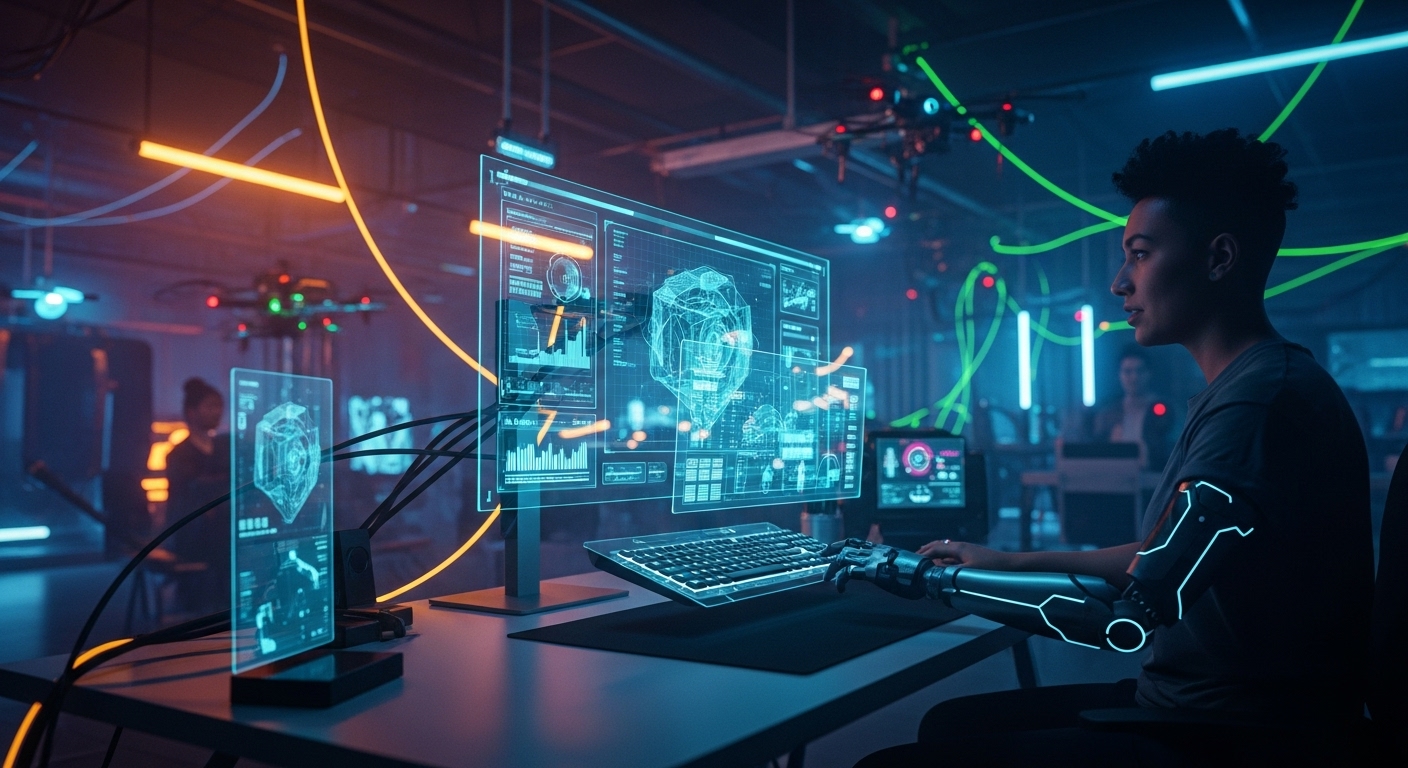
Technology is not merely a tool; it is the invisible engine that powers every facet of modern life. From the moment we wake up and check our smartphones to the time we fall asleep while streaming our favorite shows, technology surrounds us. It influences how we communicate, learn, work, and even think. The rapid pace of technological advancement has transformed society into a digital ecosystem where innovation fuels progress and connectivity defines existence. As we move deeper into the 21st century, it becomes essential to understand how technology continues to shape the world and what the future holds for humanity in this ever-evolving digital landscape.
The Digital Transformation of Everyday Life
The most profound change brought by technology is the digital transformation of daily life. Decades ago, technology was confined to laboratories and corporate offices, but now it lives in our pockets, homes, and even our bodies. Smartphones have become personal assistants, entertainment hubs, and financial tools. Smartwatches monitor health in real time, while voice-controlled devices help manage homes with simple commands.
This transformation extends beyond convenience. Digital technology has redefined communication and relationships. Social media platforms have turned the world into a global village, where people from different continents can interact instantly. Virtual meetings have replaced physical boardrooms, allowing professionals to collaborate regardless of location. Technology has made the world smaller yet more connected than ever.
Artificial Intelligence: The Mind of the Machine
Artificial Intelligence, commonly known as AI, represents one of the most significant technological revolutions of our time. AI enables machines to simulate human intelligence, learn from data, and make decisions with minimal human input. It is present in everything from virtual assistants and recommendation systems to autonomous vehicles and medical diagnostics.
In healthcare, AI-powered systems can detect diseases early by analyzing medical images and patient histories. In business, AI helps predict consumer behavior, improve marketing strategies, and optimize supply chains. Even in creative fields, AI is composing music, writing stories, and generating digital art that rivals human creativity.
However, AI’s growing influence also raises ethical questions. Concerns about data privacy, bias in algorithms, and job automation highlight the need for responsible AI development. The challenge lies in ensuring that artificial intelligence remains a force for good rather than a source of inequality or harm.
The Internet of Things and Smart Living
The Internet of Things, or IoT, has turned ordinary objects into intelligent devices capable of communicating with each other. This network of connected devices collects and shares data to make life more efficient and comfortable. From smart thermostats that adjust room temperatures to wearable fitness trackers that monitor physical activity, IoT is integrating digital intelligence into everyday life.
Smart homes are no longer futuristic fantasies. Lights, security systems, and appliances can now be controlled remotely using mobile applications. Cities are adopting IoT to create smart infrastructures, reducing traffic congestion, improving waste management, and enhancing public safety.
While IoT improves convenience, it also poses security challenges. With millions of connected devices, data protection becomes critical. Ensuring that these systems are secure from cyber threats is essential to maintain trust in the connected world.
Blockchain: The Era of Digital Trust
Blockchain technology has emerged as one of the most disruptive innovations of the decade. Though it gained fame through cryptocurrencies, its potential extends far beyond digital money. Blockchain is a decentralized ledger that records transactions securely and transparently, making it ideal for industries that rely on trust and verification.
In supply chains, blockchain ensures the authenticity of products by tracing their journey from origin to destination. In finance, it allows for fast, secure transactions without intermediaries. Governments are exploring blockchain for secure voting systems and record management, while healthcare organizations are using it to safeguard patient information.
The decentralized nature of blockchain means no single entity controls the data, ensuring greater transparency and reducing the risk of fraud. As the technology evolves, it could redefine how trust is built in the digital era.
Robotics and Automation: Building the Future Workforce
Robotics and automation are reshaping industries at an unprecedented rate. From manufacturing and logistics to healthcare and retail, robots are taking on tasks once performed by humans. They bring precision, efficiency, and reliability to operations, reducing costs and improving productivity.
In factories, industrial robots assemble products faster and more accurately than ever before. In medicine, surgical robots assist doctors in performing complex operations with remarkable precision. Delivery drones and automated vehicles are transforming the logistics industry, making transportation faster and more efficient.
While automation offers immense benefits, it also poses challenges related to employment. As machines take over repetitive tasks, workers must adapt by acquiring new skills suited for the digital economy. The future of work will rely on collaboration between humans and machines, with creativity, critical thinking, and emotional intelligence remaining uniquely human strengths.
Virtual and Augmented Reality: New Dimensions of Experience
Virtual Reality (VR) and Augmented Reality (AR) are revolutionizing how humans experience the world. VR immerses users in fully digital environments, while AR enhances the real world with digital overlays. These technologies are transforming entertainment, education, training, and design.
In entertainment, VR allows players to step inside immersive worlds, offering experiences that go beyond traditional gaming. AR, on the other hand, adds interactive elements to reality, enriching everything from shopping to museum visits. In education, students can explore ancient civilizations or conduct scientific experiments through VR, making learning more interactive and engaging.
Businesses use VR and AR for product visualization, remote collaboration, and employee training. The real estate industry employs VR tours to help clients visualize properties without physical visits. As these technologies evolve, they will blur the lines between physical and digital realities, creating limitless possibilities for innovation.
Quantum Computing: The Next Great Leap
Quantum computing represents the next frontier of technological evolution. Unlike classical computers that use bits, quantum computers use qubits, which can exist in multiple states simultaneously. This allows them to process information exponentially faster and solve problems that traditional computers cannot handle.
Quantum computing holds promise for fields such as medicine, climate science, and cybersecurity. It can accelerate drug discovery, simulate complex molecules, and optimize systems on a scale previously thought impossible. Although still in its experimental phase, quantum computing could revolutionize industries and redefine how humanity approaches problem-solving.
The Human Side of Technology
Amid all these technological advancements, one truth remains constant: technology exists to serve humanity. While it enhances efficiency and convenience, it must also uphold ethical standards and human values. The growing reliance on digital systems raises concerns about mental health, privacy, and social interaction. People are becoming more connected online yet increasingly isolated in real life.
Digital well-being is now an important topic as individuals strive to balance technology use with real-world experiences. Responsible innovation means designing technology that enriches human life without compromising individuality or freedom.
Sustainable Technology: Innovation for a Greener Future
Sustainability has become a major focus of technological innovation. As global awareness of climate change grows, technology is playing a crucial role in promoting environmental responsibility. Renewable energy systems such as solar and wind power, energy-efficient smart grids, and electric vehicles are paving the way toward a cleaner planet.
Advancements in green technology are also transforming manufacturing and agriculture. 3D printing reduces waste by producing only what is needed, while precision farming uses sensors and data analytics to optimize crop production. Smart cities rely on sustainable infrastructure, reducing energy consumption and pollution.
The convergence of technology and sustainability demonstrates that innovation can drive both progress and environmental preservation. Building a sustainable digital future requires collaboration between governments, businesses, and citizens to ensure that technology contributes positively to the planet.
The Future of Human and Machine Collaboration
The future will be defined by the partnership between humans and machines. Rather than competing with technology, people will learn to collaborate with it, combining human creativity and emotional intelligence with machine precision and speed. This collaboration will enhance problem-solving and innovation across all sectors.
In workplaces, AI will act as an intelligent assistant that simplifies decision-making and handles repetitive tasks, allowing humans to focus on strategic and creative pursuits. In medicine, robotic systems will complement doctors, while in education, personalized learning platforms will adapt to each student’s needs.
The ultimate goal is not to replace humanity but to empower it. The future belongs to societies that can integrate technology seamlessly while maintaining human-centered values.
Conclusion
Technology is the invisible engine driving the modern world. It influences every aspect of life, from communication and healthcare to education and entertainment. As innovations like artificial intelligence, blockchain, IoT, and quantum computing continue to evolve, they hold the potential to reshape civilization.
Yet, with great power comes great responsibility. The ethical use of technology, data privacy, sustainability, and equality must remain at the forefront of progress. True advancement lies not in creating smarter machines but in building a smarter world that benefits all.
The future of technology is not about gadgets or software alone; it is about shaping a better tomorrow for humanity. By balancing innovation with compassion, progress with ethics, and efficiency with empathy, technology can continue to be the invisible engine that propels humankind toward a more connected, intelligent, and sustainable future.