
Introduction: A World Transformed by Technology
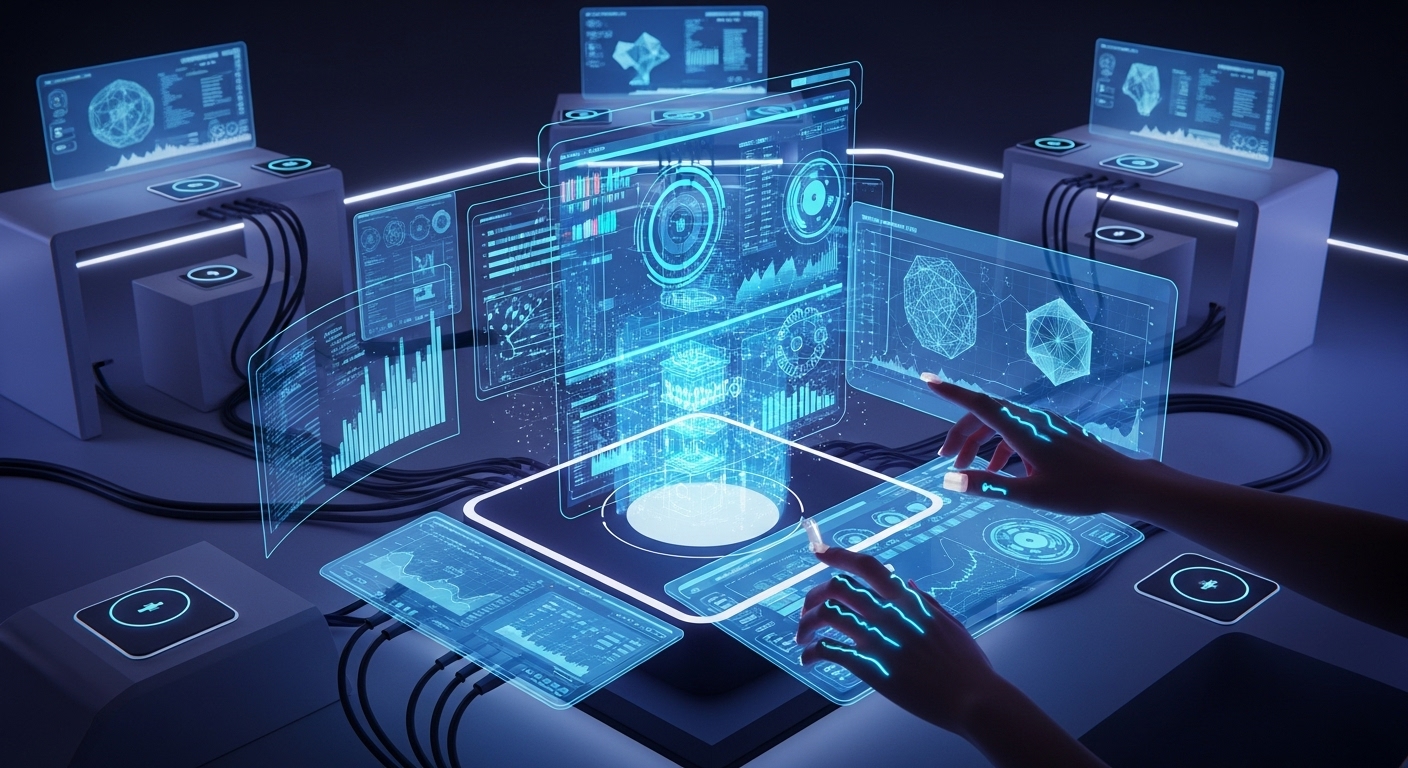
We are living through a remarkable period of technological transformation. The tools and systems that once felt like distant dreams are now at the core of our daily lives. The pace of technological change has never been faster, and with it, we are seeing new industries emerge, old ones evolve, and human behavior shifting in ways we could have never predicted. From artificial intelligence (AI) to quantum computing, the digital world is expanding, and the future is now. But what does this rapid technological growth mean for us? How will it shape the way we live, work, and connect with the world?
In this blog post, we’ll explore some of the most exciting emerging technologies and their potential to redefine our world. While some innovations are already having a significant impact, others are on the brink of revolutionizing entire industries. The question is no longer “What’s next?” but “How can we prepare for a future that is already here?”
Artificial Intelligence: The Brain of Tomorrow’s World
Artificial intelligence is often the first word that comes to mind when discussing the future of technology—and for good reason. Over the last decade, AI has gone from a niche research field to a central part of our daily experiences. AI-powered technologies are now embedded in everything from smartphones to healthcare systems, changing how we interact with machines and the world around us.
AI’s applications are vast, and they span nearly every industry. In healthcare, AI is improving diagnostics, enabling faster and more accurate identification of diseases through image recognition. In finance, AI is revolutionizing risk management and fraud detection, while in transportation, self-driving vehicles are inching closer to reality.
One of the most notable aspects of AI is its ability to learn from experience. Machine learning algorithms allow AI to improve over time, enhancing its decision-making ability and making it more effective in performing tasks. However, with these advancements come concerns about job displacement, ethical questions, and the potential misuse of AI. As we continue to integrate AI into our lives, it’s crucial to find ways to harness its potential while addressing the challenges it presents.
The Internet of Things: A World of Connectivity
The Internet of Things (IoT) is another transformative technology that is changing the way we interact with the world. IoT refers to the network of physical devices—everything from refrigerators to wearable fitness trackers—that are connected to the internet and to each other, sharing data and making decisions autonomously.
IoT is already a part of our daily lives, even if we don’t always notice it. In smart homes, IoT devices like voice assistants, thermostats, and security systems work together to create an integrated living experience. In cities, smart infrastructure is improving everything from traffic flow to waste management. Even in healthcare, IoT-enabled devices are allowing doctors to remotely monitor patient vitals, improving care and reducing hospital visits.
However, the growing number of interconnected devices also creates new challenges in terms of security and data privacy. As more personal data is generated and shared, it becomes increasingly important to ensure that these devices are secure and that individuals’ privacy is protected. The potential of IoT is vast, but we must remain vigilant in addressing the security risks it presents.
Blockchain: Revolutionizing Trust and Transparency
Blockchain technology is often associated with cryptocurrencies like Bitcoin, but its applications extend far beyond digital currencies. At its core, blockchain is a decentralized, distributed ledger that allows transactions to be recorded securely and transparently, without the need for intermediaries.
The potential uses of blockchain are vast and could revolutionize industries such as finance, supply chain management, and even healthcare. In the financial sector, blockchain has the potential to streamline transactions, reduce costs, and eliminate fraud. For supply chains, blockchain can provide transparency, allowing consumers to trace the origin of products and ensuring ethical practices are followed.
While the promise of blockchain is enormous, there are still significant hurdles to overcome, such as scalability, energy consumption, and regulatory concerns. However, as blockchain technology continues to mature, it could redefine how we store and share data, offering a more secure and transparent digital future.
Quantum Computing: Unlocking New Frontiers of Computing Power
Quantum computing is one of the most exciting—and most complex—emerging technologies on the horizon. Unlike classical computers, which use bits to process information, quantum computers use qubits, which can exist in multiple states at once. This enables them to solve problems that are far too complex for even the most powerful supercomputers.
The implications of quantum computing are mind-boggling. It could lead to breakthroughs in fields like drug discovery, material science, and cryptography, opening up possibilities that were once the stuff of science fiction. For example, quantum computers could simulate molecular structures with unprecedented accuracy, potentially leading to new medicines and materials.
However, quantum computing is still in its early stages. The hardware is incredibly delicate, and building scalable quantum systems is an ongoing challenge. While practical quantum computing is likely years away, it’s clear that this technology has the potential to radically change industries and the way we solve some of the world’s most pressing problems.
Augmented Reality and Virtual Reality: New Dimensions of Experience
Augmented Reality (AR) and Virtual Reality (VR) are two immersive technologies that are changing how we interact with the digital world. While both have been around for a while, recent advancements are making these technologies more accessible, powerful, and applicable across different industries.
Virtual Reality (VR) immerses users in a fully digital environment, often for entertainment or educational purposes. In the gaming industry, VR is offering players an entirely new level of interaction, with fully immersive worlds that can be explored in real-time. In education, VR is allowing students to experience historical events or distant locations firsthand, providing an interactive and engaging learning experience.
On the other hand, Augmented Reality (AR) overlays digital content onto the real world, enhancing our perception of reality. One of the most popular examples of AR is Pokémon GO, which allowed players to see and interact with digital creatures in real-world environments. In the enterprise world, AR is being used for training, maintenance, and design, enabling workers to visualize complex data and perform tasks more efficiently.
As AR and VR technologies continue to evolve, we can expect even more immersive and interactive experiences across entertainment, education, healthcare, and beyond.
Conclusion: Navigating the Future of Technology
We are standing at the edge of a technological revolution. Emerging technologies such as AI, IoT, blockchain, quantum computing, and AR/VR are already transforming the world, and their potential is only beginning to be realized. While these innovations hold immense promise, they also present challenges that we must address—ranging from ethical considerations to the need for regulation and data privacy.
As individuals, businesses, and societies, we must navigate this rapidly changing landscape with caution and curiosity. The future of technology is full of possibilities, but it is up to us to ensure that it is used responsibly, equitably, and for the betterment of all. Embracing these advancements with a forward-thinking mindset will not only enable us to thrive in the digital age but will also help us shape a future that reflects our collective values and goals.