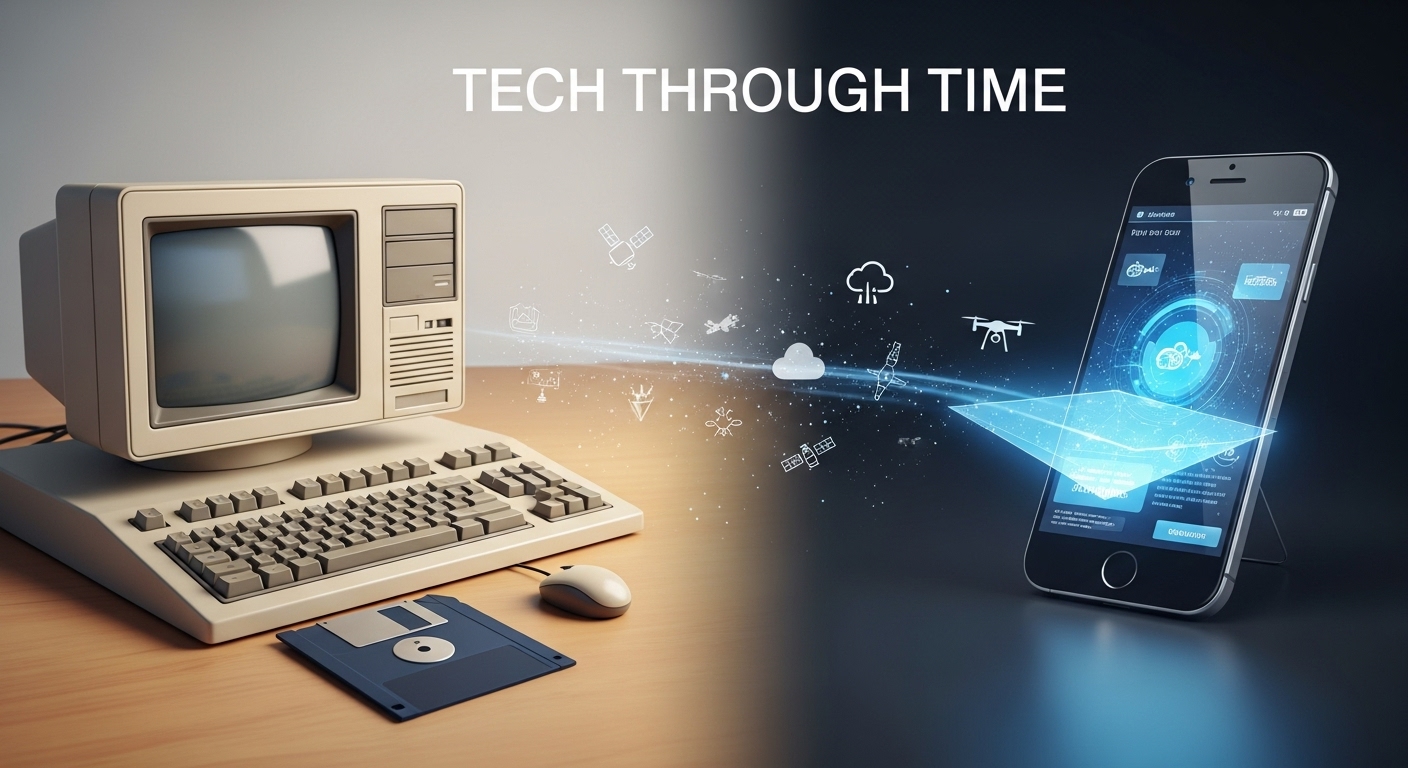

The world of technology is evolving faster than ever before. Every year brings new breakthroughs and possibilities that reshape industries, revolutionize the way we live, and change the way we interact with the world around us. Whether it’s through artificial intelligence, quantum computing, or the rise of blockchain, technology is pushing the boundaries of what’s possible. In this blog post, we’ll dive into some of the most exciting and impactful technological innovations that are poised to define the future.
Artificial Intelligence: The Brainpower Behind Tomorrow’s Tech
Artificial intelligence (AI) has moved far beyond the realm of science fiction. Today, AI powers many of the technologies we rely on, from voice assistants like Siri and Alexa to complex systems used in healthcare and finance. But as AI continues to develop, its capabilities are expanding into new territories.
In the coming years, we can expect AI to become more integrated into various industries, from self-driving cars to AI-powered medical diagnostics. Machine learning algorithms are already capable of processing vast amounts of data at lightning speed, helping doctors detect diseases earlier and more accurately. In business, AI is automating routine tasks, allowing employees to focus on higher-level strategic work.
One of the most exciting aspects of AI is its potential to think and learn autonomously. As AI systems become more sophisticated, they will be able to adapt to new situations, make decisions without human intervention, and even innovate on their own. While the possibilities are immense, this also raises important questions about privacy, ethics, and the future of work. How will society adapt to a world where machines think and act like humans?
Quantum Computing: The Next Frontier in Processing Power
Quantum computing represents a revolutionary leap forward in computing power. Unlike traditional computers that process information in binary code (0s and 1s), quantum computers use quantum bits, or qubits, which can represent multiple states simultaneously. This allows quantum computers to solve problems that would be impossible for even the most powerful classical computers to handle.
While quantum computing is still in its infancy, its potential is vast. For example, it could dramatically improve fields like drug discovery by simulating complex molecular structures, something classical computers are too slow to do. It could also enhance cybersecurity by breaking existing encryption methods and providing new ways to protect data.
However, quantum computing also presents significant challenges. The technology requires extremely stable conditions, such as near absolute zero temperatures, to function effectively. Additionally, quantum computing requires new algorithms and programming languages, which will take time to develop. Even so, the progress being made is exciting, and as the technology matures, quantum computing could transform entire industries.
5G Technology: A Faster, More Connected World
As we move into the future, 5G technology promises to be one of the most transformative advancements in connectivity. 5G networks offer faster download speeds, ultra-low latency, and greater capacity for connected devices, making it possible to connect millions of devices simultaneously. This new level of connectivity will be the foundation for many other innovations.
For example, the Internet of Things (IoT) will become much more efficient with 5G, as devices can communicate with each other in real-time. Smart homes will become even smarter, with appliances, lighting, and security systems communicating seamlessly. Autonomous vehicles, which require high-speed communication to navigate safely, will be able to operate more reliably in a 5G-powered world.
5G will also enable new applications in augmented reality (AR) and virtual reality (VR), which rely on fast, low-latency networks. With 5G, these technologies can be used in fields like education, entertainment, and remote work, offering richer, more immersive experiences. As 5G networks expand globally, they will revolutionize industries and everyday life.
Blockchain: Decentralizing the Future
Blockchain technology is most well-known for being the backbone of cryptocurrencies like Bitcoin and Ethereum, but its potential goes far beyond digital currency. At its core, blockchain is a decentralized ledger system that records transactions in a secure, transparent, and tamper-proof manner. Each transaction is verified by a network of nodes, making it nearly impossible to alter any data once it’s recorded.
One of the most promising uses of blockchain is in supply chain management. With blockchain, every step of a product’s journey—from raw materials to finished goods—can be tracked and verified, ensuring transparency and reducing fraud. Similarly, blockchain is being explored for secure voting systems, identity verification, and even digital contracts that automatically execute when certain conditions are met.
In addition to enhancing security and transparency, blockchain can also reduce costs by eliminating intermediaries. Traditional systems rely on middlemen like banks or brokers to verify transactions, but blockchain allows peer-to-peer transactions without the need for these intermediaries. As more businesses explore blockchain’s potential, we can expect to see its influence grow in industries like finance, healthcare, and logistics.
Robotics: Transforming Industries and Improving Lives
Robotics is another field where technology is making remarkable strides. While robots have long been a staple of manufacturing and assembly lines, advancements in artificial intelligence and machine learning are making them smarter, more adaptable, and capable of performing a wider range of tasks.
In healthcare, robots are already being used to perform surgeries with incredible precision, and they’re playing a growing role in rehabilitation and elder care. Surgical robots, for instance, allow doctors to perform minimally invasive procedures with greater accuracy and fewer risks for patients.
In industries like construction and logistics, robots are being used to automate dangerous and physically demanding tasks, improving safety and efficiency. Autonomous drones, for example, are used to inspect hard-to-reach areas, reducing the need for human workers to perform risky tasks at height.
As robots become more capable, we can expect them to take on even more complex roles, from personal assistants to caregiving robots that provide companionship and support for elderly individuals. However, as with other emerging technologies, the rise of robotics brings important ethical considerations, such as the impact on jobs and the need for responsible regulation.
The Metaverse: A Virtual World of Endless Possibilities
The concept of the metaverse—the idea of an interconnected virtual universe where people can interact with each other and digital environments in real time—has gained significant traction in recent years. Virtual reality (VR) and augmented reality (AR) are the cornerstones of the metaverse, and together, they have the potential to create immersive digital worlds that blend the real and the virtual.
In the metaverse, users could attend virtual meetings, explore digital landscapes, shop in virtual stores, or even interact with friends and colleagues in shared virtual spaces. The technology already exists to create such experiences, but as the metaverse continues to develop, we will likely see entire industries built around virtual real estate, digital goods, and online social experiences.
While the metaverse presents exciting opportunities for entertainment, education, and business, it also raises significant challenges. Issues like privacy, security, and digital addiction will need to be addressed to ensure that the metaverse is a safe, inclusive, and positive space for users. The rise of digital currencies and NFTs also creates questions about the ownership and value of virtual goods.
Conclusion: Embracing a Technologically-Driven Future
The future of technology holds immense potential, and the innovations we’re seeing today are just the beginning. From artificial intelligence and quantum computing to blockchain and the metaverse, we are on the cusp of a technological revolution that promises to reshape every aspect of our lives.
However, as we embrace these new technologies, we must also be mindful of their implications. The ethical, social, and economic challenges associated with these advancements cannot be ignored. It will take thoughtful regulation, responsible innovation, and collaboration across industries to ensure that technology serves the greater good.
As we move into the future, one thing is clear: technology will continue to play an ever-increasing role in shaping the world around us. By staying informed and adaptable, we can ensure that we harness its power for positive change and build a future that benefits everyone.